
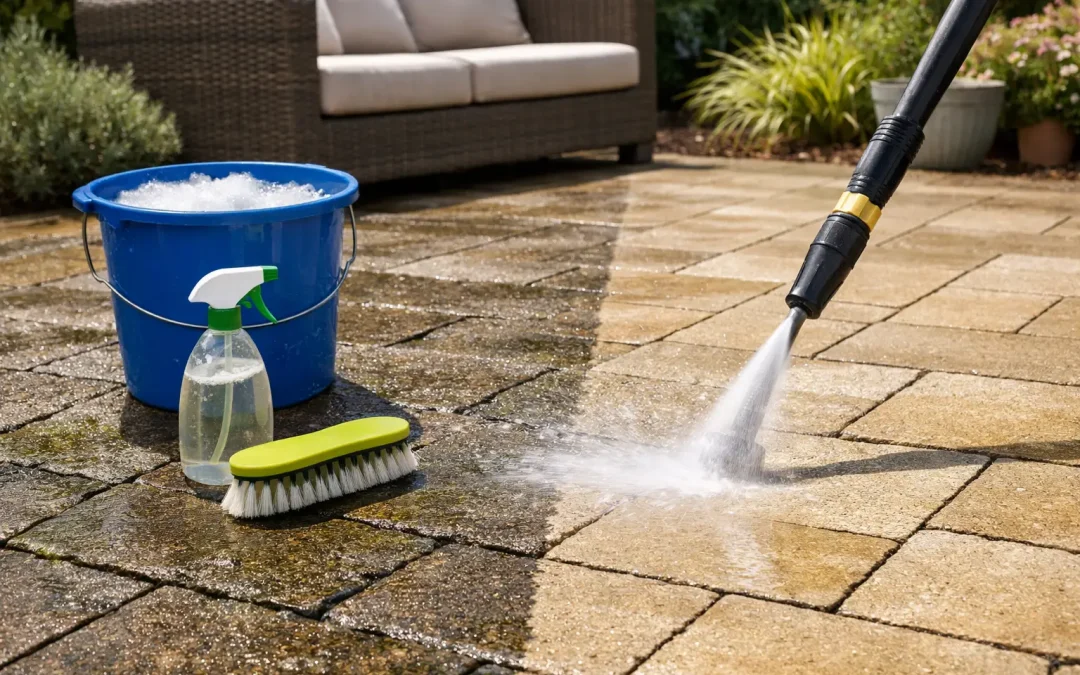
A patio can go from smart and inviting to slippery and tired-looking faster than most people expect. If you are weighing up the best patio cleaning methods, the right answer depends on what the patio is made from, how heavily soiled it is, and whether you want a quick refresh or a proper restoration that lasts.
What are the best patio cleaning methods?
The best patio cleaning methods are not always the most aggressive ones. A patio covered in light dirt and leaf staining may only need a good sweep, a suitable cleaning solution and a controlled rinse. A surface with thick algae, black spot, grease or years of compacted grime often needs more than that, but more pressure is not automatically better.
The key is matching the method to the surface. Concrete can usually take a firmer approach than natural stone. Block paving often needs extra care because the jointing sand can be disturbed. Porous slabs can stain easily and may react badly to strong chemicals if used carelessly. Getting this part right helps you clean effectively without damaging the finish.
Start with the patio material, not the dirt
Before any cleaning begins, it is worth identifying the surface properly. Homeowners often treat all patios the same, but sandstone, limestone, porcelain, concrete and block paving each respond differently.
Porcelain is generally easier to clean because it is less porous, so dirt tends to sit on the surface rather than soak in. Natural stone, especially sandstone, can hold moisture and organic growth, which is why green staining and dark patches are so common. Concrete is hard-wearing, but it can still etch or look patchy if cleaned unevenly. Block paving can come up very well, but if the area is jet washed too aggressively, the joints may need re-sanding afterwards.
That is why a quick visual check matters. It helps you avoid turning a cleaning job into a repair job.
Manual scrubbing for lighter dirt and routine upkeep
For general maintenance, manual cleaning is often overlooked, but it remains one of the safest methods available. A stiff outdoor brush, warm water and a patio cleaner suited to the material can shift surface dirt, bird mess and early organic growth without putting the slabs under unnecessary stress.
This works especially well for smaller patios, newer surfaces and areas that are cleaned regularly. It also gives you more control around edges, pointing and decorative features. If you have only a few stained patches rather than widespread grime, spot cleaning by hand can be more sensible than cleaning the whole area with machinery.
The trade-off is time. Scrubbing takes effort, and it will not always remove deep black spot, heavy moss build-up or oil staining. Still, for regular care, it is one of the most sensible ways to keep a patio presentable between deeper cleans.
Pressure washing and jet washing for deeper results
When people think of patio cleaning, pressure washing is usually the first method that comes to mind. For many patios, it is effective. Used properly, it can remove built-up grime, moss, algae and weather staining far more quickly than hand scrubbing.
It is also where the most mistakes happen. Too much pressure, too close to the surface, can scar stone, damage pointing, strip jointing sand and leave visible lines across the slabs. Soft natural stone is particularly vulnerable. A patio may look cleaner at first, but the surface can end up rougher, more porous and quicker to attract dirt again.
Professional jet washing is different from simply using maximum power. The pressure is adjusted to suit the material, the nozzle distance is controlled, and the cleaning pattern is consistent. In many cases, this is what delivers a uniform finish rather than the patchy result often seen after DIY attempts.
For larger patios, driveways that blend into patio areas, or properties preparing for sale or tenancy changeovers, pressure washing is often the most practical route. It is fast, visible and effective when handled correctly.
The best patio cleaning methods for algae, moss and black spot
Organic growth needs more than a rinse. Algae and moss thrive in damp, shaded areas, especially during colder months. Black spot is even more stubborn and can be one of the hardest stains to shift from stone patios.
For moss and algae, the most effective approach usually combines physical removal with a treatment designed to kill off remaining spores. If you only wash away the visible layer, regrowth can happen quickly. A suitable biocidal or anti-fungal treatment can help the patio stay cleaner for longer, provided it is appropriate for the surface and applied safely.
Black spot is different. It often embeds itself into porous stone and can survive ordinary household cleaners. It may improve with repeated treatment, but heavily affected patios often need specialist products and a more thorough cleaning process. This is one of those cases where expectations need to be realistic. A neglected patio can be restored dramatically, but some older staining may need more than one visit to improve fully.
Dealing with oil, rust and stubborn localised stains
Not every patio problem is weather-related. Barbecue grease, plant pot rings, rust marks from metal furniture and spilled paint all need slightly different treatment.
Oil stains are best tackled early. Once grease sinks into porous paving, it becomes harder to remove completely. Degreasers can help, but the wrong product may discolour the slab or leave a clean patch that looks noticeably different from the rest of the patio. Rust can also be tricky, especially on natural stone, because some acidic cleaners may do more harm than good.
This is where caution matters. A stain-specific treatment is usually more effective than throwing a strong general cleaner at the problem. Testing in a small hidden area first is always sensible, particularly with older patios or decorative stone.
Should you use bleach or household patio cleaners?
A lot of property owners reach for bleach because it is cheap and easy to find. It can lighten some stains and kill off surface growth, but it is not always the best choice. Used incorrectly, it can affect surrounding plants, irritate skin, leave streaks and react badly with certain surfaces.
Many off-the-shelf patio products can work well for light to moderate dirt, especially when used as part of regular maintenance. The issue is not whether a product is sold as a patio cleaner, but whether it is suitable for the paving you have. Some are too harsh for natural stone. Others simply are not strong enough for years of built-up grime.
Eco-friendly options are often a better fit where runoff, pets or planted borders are a concern. They may take a little longer to work, but they can still deliver strong results when paired with proper technique.
Why sealing is sometimes worth considering
Cleaning gets the attention, but sealing can make a real difference afterwards on the right type of patio. Once a surface has been cleaned and allowed to dry properly, a sealant may help reduce water penetration, staining and future algae build-up.
It is not right for every patio. Some surfaces do not need it, and some owners prefer the natural look of unsealed stone. Poor application can also create an artificial finish or trap moisture if the slabs are not fully dry. But where porosity is high and ongoing staining is a problem, sealing can reduce maintenance and help the patio stay cleaner for longer.
This is especially useful in shaded gardens or busy family spaces where the patio sees regular foot traffic, outdoor dining and planters that trap moisture.
When professional patio cleaning makes more sense
There is a point where DIY stops being cost-effective. If the patio is large, very dirty, slippery underfoot or made from a surface you are unsure about, professional cleaning is often the safer option.
An experienced team will know how to assess the material, choose the right pressure, use appropriate products and deal with issues like re-sanding block paving or treating organic growth properly. For landlords, estate agents and commercial premises, that matters even more because presentation and safety both affect how the space is perceived.
For properties across Kent, especially where outdoor areas need to look presentable without trial and error, a professional service can save time and avoid accidental damage. Clean Genie Services sees this regularly with patios that have been overwashed, unevenly cleaned or left with stubborn staining after a weekend DIY attempt.
How often should a patio be cleaned?
That depends on the location and how the patio is used. A sunny, open patio may only need a thorough clean once or twice a year, with simple sweeping in between. A shaded area beneath trees may need more regular attention because of algae, moss and leaf staining.
If safety is an issue, act sooner rather than later. Slippery patios are not just unsightly. They can become a real hazard in wet weather. Routine maintenance is usually cheaper and easier than waiting until the surface is heavily soiled.
The best results come from a practical mix of regular upkeep and timely deeper cleaning. That keeps the patio looking better year-round and helps protect the surface itself.
A clean patio changes how the whole outside space feels. Whether you are freshening up your home, preparing a rental property, or improving the look of a business frontage, the right method is the one that gets strong results without causing damage – and that balance is always worth getting right.