
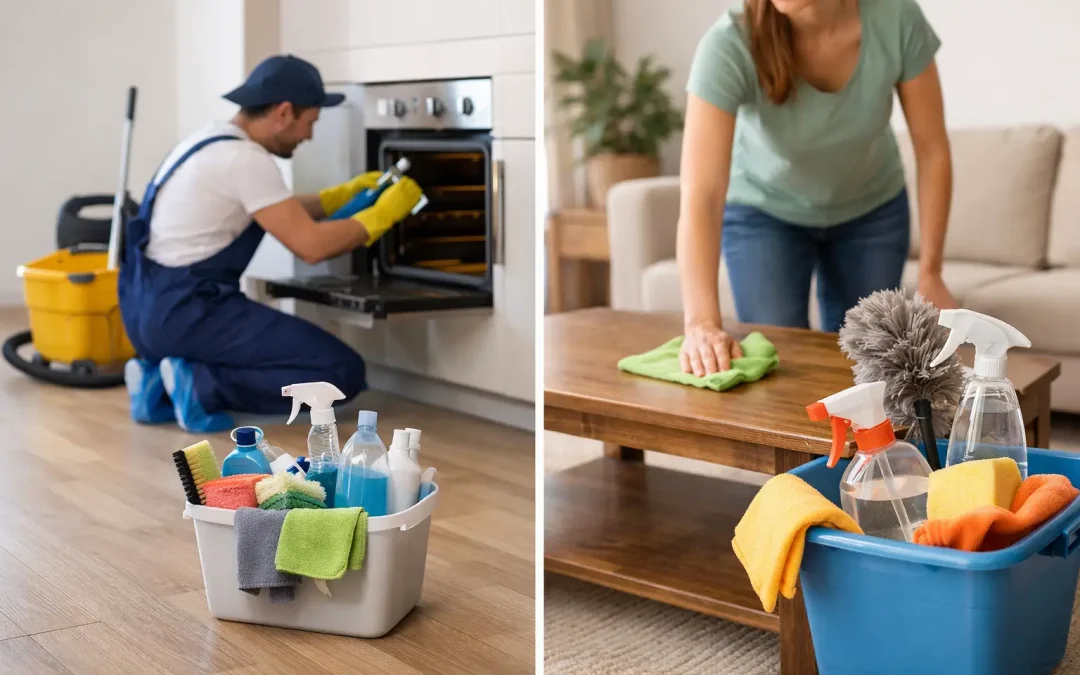
The difference between end of tenancy cleaning versus regular cleaning usually becomes obvious when a tenant is due to hand back the keys and the property still looks “clean enough” at first glance. A quick tidy, a hoover through, and wiped surfaces may work for day-to-day living, but that is rarely the standard expected at checkout. When a deposit, a new tenant, or a managed handover is involved, the level of detail matters.
Regular cleaning is about keeping a home or flat presentable and comfortable. End of tenancy cleaning is about restoring the property to a high standard across every room, with close attention to areas that are easy to miss during weekly upkeep. They serve different purposes, and treating them as the same job can lead to failed inspections, delays, and avoidable disputes.
What regular cleaning is really for
Regular cleaning is maintenance. It keeps dust, grease, crumbs, and everyday mess under control so a property stays pleasant to live in. Most people focus on the obvious tasks – vacuuming carpets, mopping floors, wiping kitchen sides, cleaning the bathroom, and keeping surfaces clear.
That routine matters. A well-maintained property is easier to deep clean later, and regular care helps prevent heavier build-up around cookers, tiles, shower screens, skirting boards, and internal glass. But regular cleaning is usually shaped by time and practicality. People clean what they use most, and they often work around furniture, leave high or awkward spots for another day, and skip the less visible details.
There is nothing wrong with that. For homeowners and tenants during normal occupancy, regular cleaning is sensible and efficient. It supports hygiene and presentation without turning every weekend into a full property reset.
End of tenancy cleaning versus regular cleaning: the real difference
End of tenancy cleaning is not just regular cleaning done a bit more thoroughly. It is a top-to-bottom reset of the property with the aim of leaving it inspection-ready.
That means attention moves beyond the obvious. Instead of wiping around items, everything is cleaned properly. Instead of a quick bathroom clean, limescale, soap residue, taps, grout, screens, and fittings all need proper attention. In the kitchen, grease around the hob, oven, extractor areas, cupboard fronts, splashbacks, and skirting often becomes a deciding factor in whether the property feels professionally cleaned or simply tidied.
It also tends to involve areas that regular cleaning does not always cover well, such as inside cupboards, behind and beneath appliances where accessible, internal windows, frames, ledges, doors, handles, switches, and marks on painted surfaces where suitable. The goal is consistency across the whole property, not just the rooms that get the most use.
For landlords, letting agents, and incoming tenants, that difference is significant. A property that looks acceptable at a glance can still fail expectations if grease remains in the kitchen, dust sits on high surfaces, or the bathroom shows staining and residue.
Why landlords and agents expect more than a weekly clean
At the end of a tenancy, the property is being judged differently. It is no longer just a lived-in home. It is an asset being checked, re-let, marketed, or handed over. Standards rise because the condition of the property has financial and practical consequences.
A landlord may need the home ready for new tenants immediately. An agent may be working to a check-out report. A tenant may be trying to recover as much of the deposit as possible. In all three cases, the cleaning needs to stand up to scrutiny.
This is where misunderstandings happen. A tenant may feel they have cleaned properly because the property looks neat. But inspection standards usually focus on detail, especially in kitchens and bathrooms. Grease, limescale, dust build-up, food debris, and overlooked internal surfaces are common reasons why a clean is judged as incomplete.
That is why end of tenancy cleaning tends to be much more intensive than the routine many people keep during occupancy.
Which areas usually make the biggest difference
The kitchen nearly always carries the most weight. It is the room where regular cleaning often keeps things under control on the surface while allowing hidden build-up to develop over time. Oven interiors, hob surrounds, extractor filters, cupboard tops, kickboards, sink areas, and tiled splashbacks all show whether a property has had a proper final clean.
Bathrooms are a close second. Limescale around taps, shower heads, screens, grout lines, toilets, and sealant can make a room look poorly maintained even when it has been cleaned recently. A weekly wipe-down is not the same as removing established residue.
Then there are the finishing details that shape the overall impression – skirting boards, internal glass, window sills, door frames, radiators, light switches, plug sockets, and flooring edges. These areas do not usually dominate day-to-day cleaning routines, but they stand out during check-out inspections.
Carpets can also be a deciding factor. A regular vacuum helps with appearance, but it will not deal with embedded dirt, odours, or stains. Depending on the tenancy agreement and condition of the flooring, a deeper clean may be needed.
When regular cleaning is enough – and when it is not
If you are staying in the property, regular cleaning is generally enough to keep the home in good order. It is practical, cost-effective, and appropriate for occupied spaces where rooms are being used every day.
If you are moving out, regular cleaning is often not enough on its own unless the property has been maintained to an exceptional standard and still receives a thorough final deep clean. Even then, the issue is not just cleanliness. It is whether the property meets the expected handover standard.
For landlords preparing a property between tenants, regular cleaning is rarely the right service. Void periods are expensive, and a rushed or incomplete clean can slow down viewings, trigger complaints from incoming tenants, or leave the property looking below standard in marketing photographs.
For agents managing multiple properties, the benefit of a professional end of tenancy clean is consistency. The standard is clearer, the finish is stronger, and there is less risk of the job needing to be revisited.
Why a professional service is often the safer option
A proper end of tenancy clean takes time, equipment, and experience. It is not just a matter of effort. Some residues, stains, grease, and build-up need the right products and methods to remove them safely and effectively.
Professional cleaners know where inspection points usually fail and how to clean systematically so nothing important is missed. That is especially valuable in larger homes, shared houses, and properties that have had heavy use. It also matters where there are tight turnaround times between one occupier leaving and another moving in.
For tenants, paying for a professional clean can be a practical decision rather than an extra expense. If it reduces the risk of deductions, avoids return visits, and saves a full day or two of hard work, it can make financial sense. For landlords and property managers, it protects presentation and helps keep lettings moving.
This is where using an insured, experienced provider matters. The reassurance is not just about having the cleaning done. It is about knowing the work will be carried out properly, with the right level of care for the property.
End of tenancy cleaning versus regular cleaning in real terms
The easiest way to think about end of tenancy cleaning versus regular cleaning is this: regular cleaning supports daily living, while end of tenancy cleaning supports a successful handover.
One is ongoing maintenance. The other is a restorative service with a clear outcome. That outcome might be a better chance of a full deposit return, a smoother check-out, a property ready to market, or a home that gives the next tenant the right first impression.
In busy parts of Kent, where landlords, tenants, and agents often need quick turnarounds, that difference has practical value. A property that has been cleaned to the right standard is easier to inspect, easier to let, and easier to move on from.
Clean Genie Services sees this first-hand across end of tenancy work. Properties that have had regular upkeep usually respond well to a final deep clean, but they still need that extra level of detail before handover. The final result is what counts.
If you are deciding which service you need, the key question is simple: are you maintaining the property for everyday life, or preparing it for someone else to assess? Once you answer that honestly, the right level of cleaning is usually clear.
A property does not need to be perfect to be lived in, but when keys are changing hands, a higher standard is often the difference between a straightforward handover and a problem that could have been avoided.