
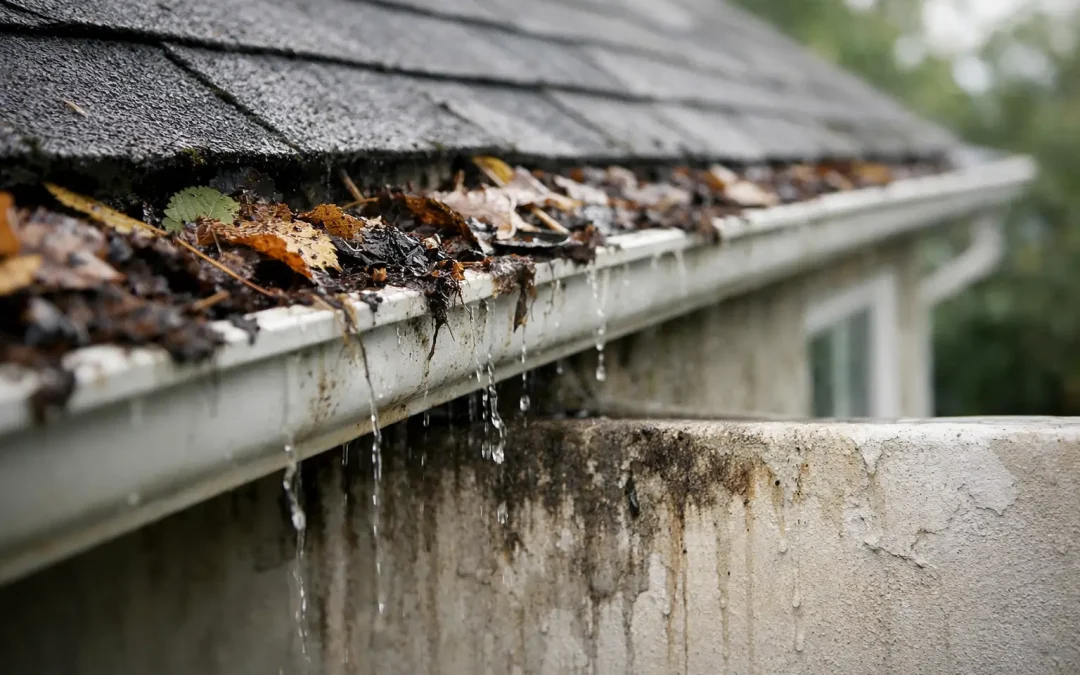
Water stains high up on an internal wall rarely start inside the room. More often, the problem begins outside, where rainwater should be moving cleanly through the guttering and away from the building. If you are asking can dirty gutters cause damp, the short answer is yes. When gutters are clogged with moss, leaves, silt and general debris, water can overflow, back up, or sit where it should not – and that is when damp problems begin.
For homeowners, landlords and commercial property managers, this is one of those maintenance issues that looks minor until it becomes expensive. A full gutter may not seem urgent on a dry day, but after steady rain it can send water down external walls, behind fascias, into roof edges and around window openings. Over time, that repeated soaking can show up indoors as peeling paint, musty smells, staining and damp patches.
How dirty gutters lead to damp
Gutters have one simple job. They collect rainwater from the roof and direct it safely into the downpipes and drainage system. When they are clean and free-flowing, they protect the walls, roofline and foundations from excess water.
When they are dirty, that system stops working properly. The most common issue is overflow. Water spills over the front or back edge of the gutter and runs down the face of the property. If that happens often enough, masonry can become saturated. Brick, render and mortar all absorb some moisture, and repeated drenching makes it much harder for walls to dry out.
A second problem is water backing up. If a blockage sits near a downpipe outlet, rainwater can pool in the gutter channel. That standing water can creep under roof coverings or into the roof structure, especially where joints, brackets or felt edges are already worn. In older properties, this is a particular risk because the roofline may already have small weaknesses.
The third issue is weight. Wet debris is heavy. A gutter packed with moss and sludge can start to sag or pull away from the wall. Once the angle is wrong, even more water collects instead of draining away. That creates a cycle where the gutter performs worse every time it rains.
Can dirty gutters cause damp in every part of a property?
Not always, and that is where a bit of care is needed. If you are wondering whether can dirty gutters cause damp in your specific property, the answer depends on where the blockage is, how the building is constructed, and how long the problem has been left.
Overflowing gutters commonly affect the upper parts of external walls first. That may lead to internal damp on upstairs walls, around chimney breasts, near windows or close to ceiling lines. If water is falling consistently at ground level because a downpipe is blocked, it can also soak the area around the base of the building. In some cases, that contributes to damp lower down as well.
That said, not every damp patch is caused by gutters. Condensation, plumbing leaks, cracked render, damaged pointing and roofing defects can all create similar signs. This is why guessing can cost time. The position of the damp, the timing of when it appears, and the condition of the outside of the building all matter.
The warning signs to look for
The earlier you spot a gutter issue, the easier it usually is to deal with. Outside, you may notice plants growing from the gutter, green staining on walls, black streaks, sagging sections, or water spilling over during rain. You might also see moss collecting around downpipes or damp patches on brickwork below the roofline.
Inside, the signs tend to be more subtle at first. Paint can start to bubble. Wallpaper may lift at the edges. You might notice a tide mark, a mould patch, or a persistent damp smell near an external wall. In some properties, especially rentals or commercial buildings, these signs are mistaken for poor ventilation when the real issue is rainwater management outside.
One useful clue is whether the problem gets worse after bad weather. If a damp patch deepens or spreads after heavy rain, gutters and downpipes should be high on the list of things to check.
Why blocked downpipes make the problem worse
A lot of people focus on the horizontal guttering and forget the downpipes. In practice, a blocked downpipe can be just as damaging. Even if the gutter itself looks only partly full, water cannot drain away if the outlet is blocked with leaves, nesting material or compacted debris.
That is when the whole system starts to fail. Water builds up in the gutter, overflows at weak points, and can saturate the wall below. If the downpipe leaks at a joint, water may also discharge directly onto masonry every time it rains. That sort of regular soaking is exactly what leads to damp-related deterioration over time.
For landlords and managing agents, this can become a repeat complaint if it is not dealt with properly. The visible damp indoors gets attention, but unless the blocked rainwater goods are cleared and checked, the source remains.
Seasonal build-up is more serious than it looks
Autumn and winter are usually the worst times for blocked gutters. Falling leaves, moss from roofs and general debris build up quickly, especially after windy weather. Then heavy rain tests the system at exactly the wrong time.
In parts of Kent with mature trees, guttering can fill faster than many property owners expect. A house may look fine from the ground, but that does not tell you what is happening inside the channels. By the time overflow is visible, the build-up is often already substantial.
This is one reason regular maintenance makes financial sense. Cleaning out the gutters is far more straightforward than dealing with internal damp repairs, damaged plaster, mould treatment or decayed fascias.
What happens if the problem is ignored?
Left unchecked, dirty gutters can contribute to much more than a cosmetic damp patch. Constant water exposure can weaken mortar joints, stain render, rot timber at the roofline and damage soffits and fascias. If moisture reaches loft spaces or wall cavities, repairs can become more involved.
Inside the property, the effects range from unpleasant to expensive. Damp walls can spoil decoration, create a musty environment and encourage mould growth. For tenants, that affects comfort. For landlords and business owners, it can lead to complaints, maintenance costs and avoidable disruption.
There is also the issue of timing. Damp rarely announces itself all at once. It builds gradually. What starts as a blocked gutter in one wet season can turn into repeated water ingress by the next.
The best way to deal with gutter-related damp
The first step is to inspect the guttering properly, especially after heavy rain. If there is visible overflow, sagging, staining or debris, the gutters need clearing and checking. It is also worth making sure the downpipes are flowing freely and that brackets, joints and alignment are sound.
For some low-level sections, a visual check from the ground can reveal obvious faults. But full inspection and cleaning are often safer and more effective when handled professionally. High gutters, awkward rooflines and compacted debris can be difficult to deal with without the right equipment.
A proper gutter clean should do more than remove leaves. It should clear the full run, check outlets, test water flow where needed and identify sections that are leaking, loose or misaligned. If damp has already appeared indoors, acting quickly matters. Cleaning the gutter may stop further water ingress, but interior surfaces will still need time to dry and may need repair depending on the extent of the damage.
For properties in Maidstone, Medway, Rainham or nearby areas with regular tree cover and seasonal debris, scheduled gutter maintenance can prevent a lot of unnecessary trouble. It is a practical part of property care, not an optional extra.
When the issue might not be the gutter alone
There are cases where dirty gutters are part of the problem rather than the whole problem. For example, if pointing is badly worn, render is cracked, or roof tiles are damaged, overflowing water will exploit those weak spots faster. In that situation, cleaning the gutters helps, but it may not solve everything.
That is why a sensible approach is to treat gutters as one key part of the building’s defence against rainwater. If they fail, other defects become more serious. If they are kept clear, the property has a much better chance of staying dry and sound.
Clean Genie Services sees this regularly with exterior cleaning and gutter maintenance work – problems that looked like mysterious damp indoors often had a straightforward cause outside. The longer it is left, the less straightforward it becomes.
If rainwater is not being carried away properly, the building will usually tell you. A dark patch, a green stain, a drip in the wrong place – these are early warnings worth taking seriously. Dealing with dirty gutters promptly is one of the simplest ways to protect your property from damp before small signs turn into repair bills.