
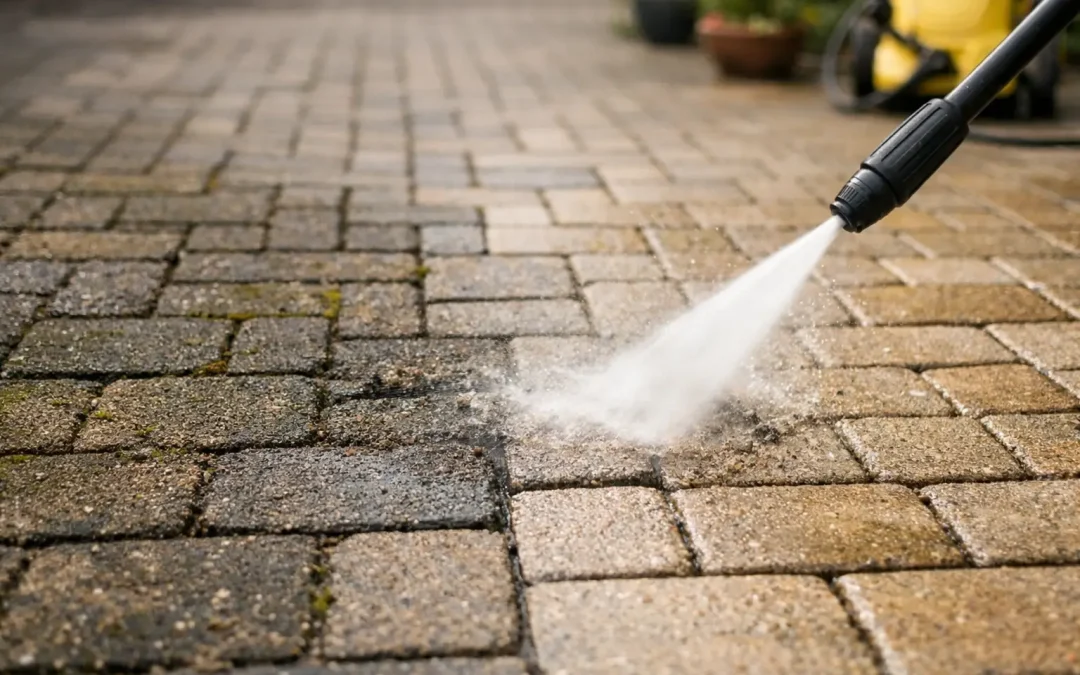
A block paved drive can look tired long before it is actually worn out. Algae, black spots, weeds and general grime build up slowly, and many property owners ask the same question – is jet washing bad for block paving? The honest answer is that it can be. Done properly, it is an effective way to restore the surface. Done carelessly, it can strip out the jointing sand, mark the blocks and shorten the life of the paving.
That is why block paving should never be treated the same way as a concrete slab or a hard stone patio. It has joints, edge restraints and a surface finish that all need a bit more care. The goal is not just to make it look cleaner for a week. It is to clean it without creating movement, sinking or future weed growth.
Is jet washing bad for block paving or just risky?
Jet washing is not automatically bad for block paving. The risk comes from pressure that is too high, poor technique, or skipping the steps that should come after cleaning.
Block paving relies on kiln-dried jointing sand between the blocks to stay stable. A powerful jet directed too closely into the joints can blast that sand straight out. Once the joints are empty, the blocks can begin to move under foot or under vehicle weight. Water can also get deeper into the bedding layer, which is where longer-term issues begin.
There is also the surface itself to think about. Some paving blocks have a decorative face or coloured finish that can be worn down by aggressive pressure washing. If the nozzle is held too near the surface, you may end up with lines, striping or a roughened texture that traps dirt more quickly next time.
So the better question is not simply whether jet washing is bad. It is whether it is being done with the right pressure, the right angle and the right aftercare.
What can go wrong when block paving is pressure washed badly?
The most common issue is loss of jointing sand. This often happens when the lance is pointed directly into the joints or used at full force across the whole drive. The paving may look clean at first, but once the sand is gone the blocks are no longer held as firmly in place.
Weed growth can actually get worse after poor cleaning. That sounds backwards, but it happens often. Jet washing removes the top growth, yet if the joints are left open afterwards, wind-blown seeds settle into the gaps and quickly take hold.
Another problem is surface damage. Older or lower-quality blocks can be more vulnerable, especially if they have already seen years of weathering. Heavy pressure can leave patchy colouring or visible etching. On some drives, it also exposes previous repairs or uneven weathering that were less noticeable before.
Drainage can be affected too. If debris is pushed into gullies or if sand and moss wash into drainage channels, water may start to sit on the surface. Standing water usually means more algae, more staining and more maintenance.
When jet washing block paving is the right choice
There are plenty of cases where jet washing is the right solution. If the paving is structurally sound, the blocks are in good condition and the work is carried out carefully, pressure washing can remove built-up grime far more effectively than brushing alone.
It is especially useful for drives and paths with slippery algae, traffic film, general dirt and moss. These issues are not just cosmetic. On paths, green growth can become a genuine slip hazard. On driveways, thick grime can make the whole front of the property look neglected.
For landlords, sellers and commercial premises, presentation matters as well. Clean paving improves first impressions quickly. The key is making sure the clean does not come at the expense of the surface itself.
How to clean block paving safely
Safe cleaning starts with restraint. More pressure does not always mean a better result. In many cases, moderate pressure with the correct nozzle is enough to lift dirt without tearing into the joints.
The angle of the spray matters as much as the pressure setting. Washing across the surface rather than directly down into the joints helps protect the sand. Keeping a sensible distance from the paving also reduces the risk of marking the blocks.
Pre-treatment can make a big difference. If algae, lichen or heavy organic growth is present, applying a suitable cleaning solution first can loosen the contamination so less pressure is needed overall. That is often the smarter approach, especially on older paving.
After washing, the paving needs time to dry fully before fresh kiln-dried sand is brushed back into the joints. This step is not optional. Re-sanding is what restores stability and helps reduce future weed growth. If the paving is sealed, that should only be considered once the surface is completely dry and the joints are properly filled.
Is jet washing bad for block paving if it is old or damaged?
This is where the answer shifts more firmly towards caution. If the paving is already loose, dipped, badly weeded or missing jointing sand, jet washing may expose the problem faster. It does not usually create structural faults from nowhere, but it can make existing ones more obvious and more severe.
Older block paving often needs a gentler approach. The blocks may be more porous, the edges may be more worn and previous movement may have weakened the joints. In that situation, cleaning should be part of a wider maintenance plan rather than a quick blast with a pressure washer on a Saturday afternoon.
If individual blocks are rocking or the edges have started to spread, repairs may be needed before any deep clean. Otherwise, the finish may improve briefly while the condition underneath continues to deteriorate.
DIY or professional cleaning?
DIY jet washing can work on small areas if you know what to avoid, but it is easy to cause damage without realising it. Many domestic machines are more aggressive than people expect, particularly when used with narrow nozzles or rotary attachments. The first sign of trouble is often not obvious until the surface dries and the joints appear empty.
Professional cleaning brings more control. It is not just about having stronger equipment. It is about using the right pressure for the paving, treating staining properly, protecting the joints and knowing when a surface needs a softer method.
For homeowners and landlords, that can save time and avoid the hidden cost of repairs. A driveway that needs re-levelling because the joints were blasted out is far more expensive than having it cleaned correctly in the first place. On larger drives or shared access areas, a professional service is usually the safer option.
What about sealing after cleaning?
Sealing can help, but only when the paving is clean, dry and properly re-sanded. A good sealer may reduce staining, slow down weed growth and make routine maintenance easier. It can also improve the overall appearance by enriching the colour.
That said, sealing is not essential in every case. Some property owners prefer the natural finish, and some drives simply need regular maintenance rather than an added coating. The important thing is not to rush into sealing too soon after washing. Trapped moisture can cause whitening, patchiness or poor adhesion.
A practical approach that protects your paving
If you are looking at a green, grubby driveway and wondering whether to pressure wash it, the answer is not yes or no across the board. It depends on the condition of the paving, the method used and whether the joints are restored afterwards.
For sound block paving, careful jet washing is often the fastest way to bring back a cleaner, brighter finish. For older or already unstable paving, it needs more thought and sometimes a softer touch. Either way, the aim should be the same – a drive or path that looks better and stays solid.
That is why many property owners choose experienced exterior cleaning rather than taking chances with surface damage. A professional clean should leave your block paving looking refreshed, not weakened. If you are unsure, it is always better to assess the condition first and clean with the surface in mind, not just the dirt on top of it.