
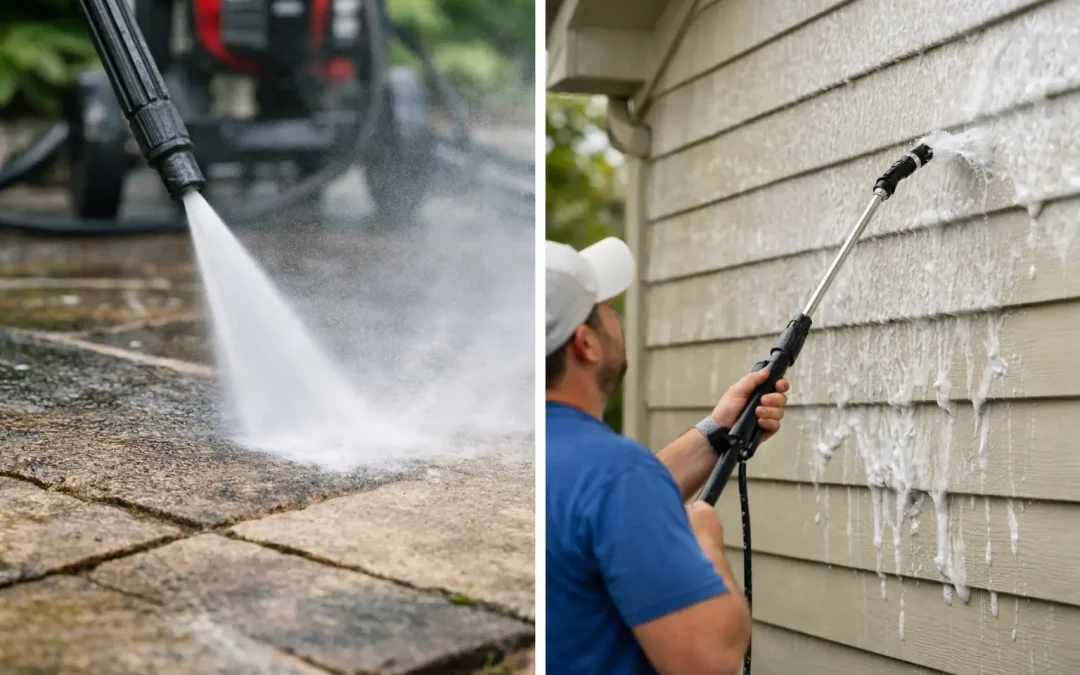
A patio covered in black spot, green algae on a render wall, and grime built up on a shopfront might all look like the same problem. They are not. Jet washing versus soft washing comes down to one key question – what needs cleaning, and how much pressure can that surface safely take?
Choosing the wrong method can do more than leave a poor finish. It can mark render, disturb pointing, drive water into weak areas, or strip away surface coatings that were meant to protect the building. The right method, carried out with the right equipment, gives you a cleaner result without causing unnecessary wear.
Jet washing versus soft washing – what is the difference?
Jet washing uses high-pressure water to remove dirt, moss, algae, mud and loose surface contamination. It is effective because force does most of the work. On strong exterior surfaces such as concrete, stone paving and some block paving, that pressure can quickly lift years of build-up and restore a much brighter finish.
Soft washing works differently. Instead of relying on pressure, it uses low-pressure application with suitable cleaning solutions to treat and break down organic growth, staining and grime. The surface is cleaned more gently, which makes it a better option where high pressure could cause damage or leave visible marks.
In simple terms, jet washing is about mechanical force. Soft washing is about controlled treatment and low-pressure cleaning. Neither is better in every case. It depends on the material, the condition of the surface and the type of contamination present.
When jet washing is the right choice
Jet washing is often the best option for hard, durable outdoor surfaces that can cope with pressure. Patios, driveways, paths, courtyard areas and some commercial external surfaces usually respond well when cleaned professionally. If mud, traffic film, algae or general weather staining is sitting on the surface, pressure washing can remove it quickly and visibly.
It is also a practical choice when appearance matters straight away. Homeowners looking to improve kerb appeal, landlords preparing a property between tenants, and businesses wanting cleaner entrances often choose jet washing because the transformation is immediate.
That said, pressure has to be controlled properly. There is a big difference between cleaning a sound concrete path and attacking older slabs with too much force. A professional approach means adjusting pressure, nozzle selection and working distance to suit the material rather than treating every job the same.
Surfaces that often suit jet washing
Concrete driveways are usually good candidates, especially where dirt and algae have built up over time. Natural stone can also clean well, although softer stone needs more care. Block paving often benefits from jet washing too, but it may need re-sanding afterwards if the joints are disturbed.
Commercial yards, bin store areas and heavily used walkways can also respond well because pressure washing removes surface grime quickly and helps improve presentation and safety.
When soft washing makes more sense
Soft washing is usually the safer choice for more delicate or porous surfaces. Render is one of the most common examples. Coloured render, monocouche render and painted external walls can be marked or damaged by excessive pressure, especially if the surface is already weathered. Soft washing allows the contamination to be treated without that aggressive impact.
Roofs are another area where soft washing is often preferred. High pressure can dislodge tiles, damage protective finishes and force water where it should not go. A low-pressure treatment is typically a more sensible way to deal with moss, algae and lichen while reducing the risk to the roof itself.
Cladding, fascias, soffits and some timber surfaces may also be better suited to soft washing. If the goal is to clean while protecting the finish, lower pressure is usually the smarter route.
Why soft washing can last longer
One of the practical advantages of soft washing is that it does not just remove visible growth from the surface. It can also treat the spores and organic matter behind it. That matters with algae, mould and lichen, which often come back quickly if they are only blasted off the top.
So if you are looking at a shaded wall that turns green every winter, or a north-facing exterior that never seems to stay clean for long, soft washing may give you a better long-term result.
The risks of getting it wrong
The biggest mistake people make is assuming more pressure means better cleaning. In reality, too much pressure can leave etching lines on stone, fur up timber, remove mortar from joints and damage render. It can also drive dirt deeper into some surfaces rather than properly treating the cause.
Soft washing, on the other hand, is not a magic answer for every job. If a driveway is thick with compacted grime and years of built-up debris, low-pressure treatment alone may not deliver the finish you want. Some surfaces need the physical cleaning power of jet washing first, or a combination of methods.
This is why a proper assessment matters. Surface age, material type, existing damage, drainage, nearby planting and the kind of staining all affect the best approach. A reliable cleaning company should not recommend a method based only on speed. They should recommend the one that protects the surface and gets the right result.
Which method is better for common property areas?
For patios and paved paths, jet washing is often the more effective option, particularly where algae and general dirt are making the area slippery. The finish can be dramatic, and it is a practical way to refresh outdoor spaces before summer or before putting a property on the market.
For render and painted exterior walls, soft washing is usually the safer choice. These surfaces can be expensive to repair if marked, so a gentler method is often the better investment.
For roofs, soft washing is generally preferred. Roof cleaning needs care, not brute force. Removing moss is only part of the job. Preserving the roof covering matters just as much.
For block paving, it depends on the condition of the paving and joints. Jet washing can clean it very effectively, but if the joints are already weak, the work needs to be carried out carefully and may need re-sanding afterwards.
For commercial exteriors, there is often no single answer. Shopfront surrounds, rear access areas, walls and bin compounds may all need different treatment on the same site. This is where a tailored service is more useful than a one-size-fits-all clean.
Cost, speed and results
Jet washing is often faster on heavy surface dirt because the pressure removes contamination quickly. If you need a patio, forecourt or entrance area looking better in a short timeframe, it is often the practical choice.
Soft washing can take longer to show the full result, especially where treatment continues working after application. But slower does not mean weaker. On the right surface, it can be the more effective and more responsible option.
Cost depends on access, size, staining and the level of care required. Delicate surfaces can take more time because they need a more controlled process. Hard surfaces may be quicker to clean but still need attention if there are drainage issues, weeds or jointing concerns. The cheapest quote is not always the best value if it leads to damage or a finish that does not last.
Why professional equipment and experience matter
Exterior cleaning is not just about owning a pressure washer. Pressure levels, water flow, chemical knowledge, surface compatibility and safe working methods all matter. Using the wrong nozzle or the wrong treatment can create a problem that is far more expensive than the cleaning itself.
For property owners in areas such as Maidstone, Medway and Sittingbourne, this is especially relevant where buildings often include a mix of older brickwork, modern render, paved drives and weather-exposed roofs. Different surfaces age differently, and they should be cleaned accordingly.
A professional, fully insured service gives reassurance that the work is being approached properly. It also means the result should not just look cleaner on the day, but stay cleaner for longer where the right treatment has been used.
So, should you choose jet washing or soft washing?
If the surface is strong, stable and heavily soiled at surface level, jet washing is often the right answer. If the surface is delicate, coated, porous or vulnerable to pressure damage, soft washing is usually the safer and more effective option.
There are also jobs where the best result comes from using both methods in the right order. That is why a proper site-specific recommendation matters more than a quick guess based on appearance alone.
At Clean Genie Services, the focus is always on choosing the method that gives outstanding results without taking unnecessary risks with the surface underneath. If you are unsure which approach your property needs, the sensible next step is to get expert advice before any cleaning starts.
A cleaner exterior should improve the look of your property, not create repair work – and that is exactly why the method matters.