
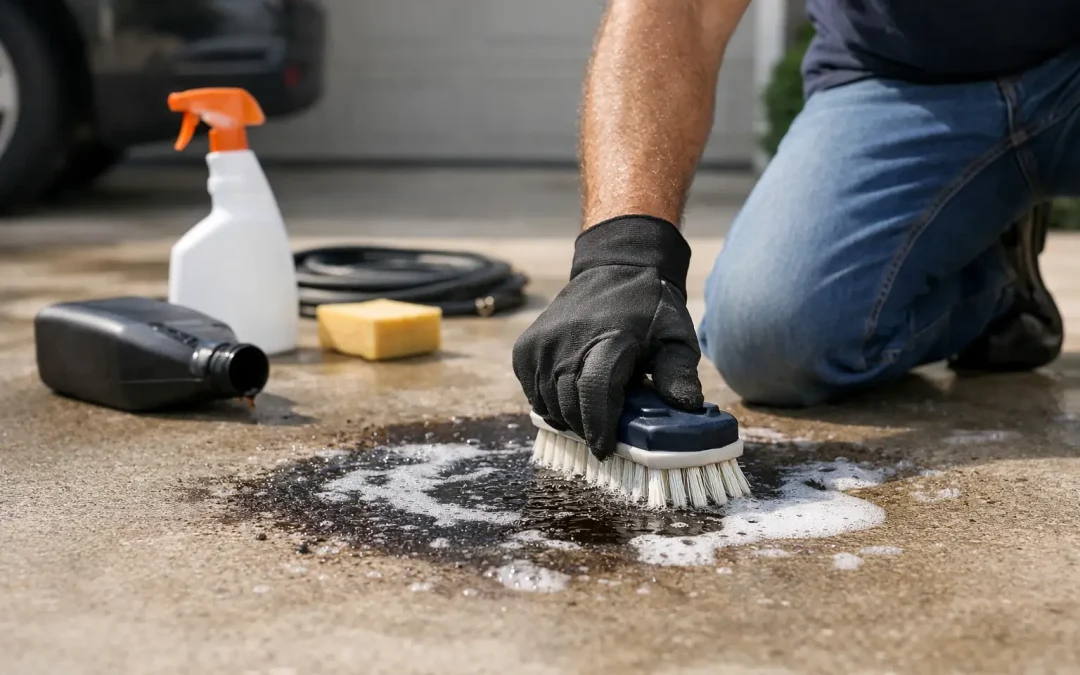
That dark patch under the car rarely stays small for long. If you are wondering how to clean driveway oil stains without making the mark spread or damaging the surface, the right method depends on two things – how old the stain is and what your driveway is made from.
Oil behaves differently on concrete, block paving and tarmac. Fresh spills sit closer to the surface and are usually much easier to lift. Older stains soak in, especially during warm weather, and often leave a shadow even after cleaning. That does not always mean the job has failed. In many cases, a visible improvement is the realistic goal, with full removal possible on lighter and less porous surfaces.
How to clean driveway oil stains without causing damage
Before you reach for a pressure washer or strong chemical cleaner, it helps to slow down for a moment. The wrong product can bleach paving, soften tarmac or drive oil deeper into the surface. A simple, staged approach tends to give the best result.
Start by checking what you are dealing with. Concrete and block paving are more forgiving, although some cleaners can still discolour them. Tarmac needs extra care because harsh degreasers and aggressive jet washing can weaken the binder and roughen the finish. If the stain is near a drain, flower bed or lawn edge, take care to contain runoff as well.
If the oil spill is fresh, blot and absorb first. Cat litter, baking soda or granules designed for spills can draw out a surprising amount before any washing begins. Leave the absorbent material in place for several hours, then sweep it up. Rubbing at this stage usually makes things worse.
Once loose oil has been removed, apply a suitable degreasing cleaner. For many domestic driveways, a specialist oil stain remover or driveway degreaser is a better choice than washing-up liquid. Household products can help with very light marks, but older stains often need something made for exterior hard surfaces. Work it in with a stiff brush, give it time to break down the residue, then rinse carefully.
Fresh oil stains
Fresh stains are the easiest to tackle because the oil has not had as much time to soak in. Cover the area with absorbent material first and let it sit. Once swept away, wash the surface with warm water and a driveway-safe degreaser, scrubbing in circular motions. You may need to repeat the process once or twice.
Avoid flooding the area straight away. Too much water too soon can spread the oil and leave a larger, thinner stain around the original patch.
Older, set-in stains
Set-in stains are more stubborn and often need more patience than force. Apply a stronger oil remover designed for exterior paving and allow it to dwell for the recommended time. Scrub thoroughly, rinse, and assess the result once the surface is dry. Wet driveways can hide remaining staining.
For deep marks, a poultice-style treatment can work well on concrete. This uses an absorbent product combined with a cleaner to draw oil up from below the surface as it dries. It is slower, but it can be more effective than repeated washing.
The best method by driveway surface
Not every driveway should be cleaned in the same way. This is where many DIY attempts go wrong.
Concrete driveways
Concrete is porous, so oil sinks in quickly. The upside is that it generally responds well to degreasers, absorbents and careful pressure washing. Start with absorbent material, follow with a proper oil remover, and scrub with a stiff brush. If needed, a pressure washer can help rinse the surface clean once the oil has been broken down.
The key point is that the pressure washer should support the cleaning stage, not replace it. Water pressure alone will not remove an oil stain that has soaked into concrete.
Block paving
Block paving can stain unevenly because the oil settles into joints as well as the blocks themselves. Remove surface oil first, then treat the stained blocks with a paving-safe degreaser. Gentle, repeated cleaning is usually better than one very harsh treatment.
After cleaning, some jointing sand may be lost, especially if pressure washing is used. That means the driveway may need re-sanding once it is fully dry to keep the blocks stable and looking tidy.
Tarmac driveways
Tarmac needs the most caution. Solvent-heavy products can soften the surface, and aggressive pressure washing can leave pitting or strip away the top layer. For tarmac, use products clearly labelled as suitable for asphalt or tarmac and avoid very high pressure.
Some oil marks on older tarmac are difficult to remove completely because the dark stain blends into the material rather than simply sitting on top. In those cases, reducing the stain and preventing further damage is often the sensible target.
Common mistakes when cleaning oil stains
The biggest mistake is trying to blast the stain away with a jet washer before using any degreaser. That often spreads the contamination and wastes time. Another common problem is using bleach or caustic products without checking suitability for the surface. These can leave pale patches, damage surrounding areas or create runoff issues.
There is also a tendency to judge the result too early. A driveway that looks clean while wet can show a remaining oil shadow once dry. It is better to clean, allow full drying time, and then decide whether another treatment is needed.
Scrubbing with a wire brush can also do more harm than good on some surfaces. A stiff bristle brush is normally enough. You want to lift the oil, not score the driveway.
When DIY works and when professional cleaning is the better option
If the stain is recent, fairly small and on a straightforward concrete surface, a careful DIY clean can work well. Many homeowners get a good result with the right absorbent product, a proper degreaser and patience.
It becomes less straightforward when the stain is old, spread across a larger area, or sitting on block paving or tarmac. The same applies if there are several stains from ongoing leaks, if the driveway has not been cleaned for years, or if previous attempts have left uneven patches. In those situations, professional exterior cleaning can save time and avoid costly mistakes.
A trained team can identify the surface properly, use commercial-grade cleaning products safely, and combine treatment with controlled pressure cleaning where appropriate. That matters if you are trying to improve kerb appeal before a sale, tidy up a rental property between tenancies, or maintain a cleaner first impression outside business premises. For properties across parts of Kent such as Maidstone and Medway, this sort of practical, results-led service is often the quickest route to a visible improvement.
How to stop oil stains coming back
Cleaning the stain is only half the job if the vehicle is still leaking. Check whether the patch came from engine oil, power steering fluid or another issue and get the source fixed. Otherwise, the stain will return and usually spread.
A drip tray can help as a short-term measure, especially if repairs are booked in but not yet done. On concrete and block paving, sealing the driveway can also reduce how deeply future spills soak in. Sealants are not a cure-all, and they need to be suitable for the surface, but they can make routine maintenance much easier.
Regular sweeping helps more than people think. Grit and dust trap oily residue and make stains look worse. Keeping the surface clean means any fresh leak is easier to spot and treat early.
How to clean driveway oil stains and get a better finish
If you want the best chance of success, treat the stain in stages rather than throwing every product at it at once. Absorb first, degrease second, rinse carefully, then reassess when dry. Repeat if needed. That slower approach usually gives a cleaner, more even result.
For larger or stubborn stains, especially where presentation matters, professional cleaning is often the more reliable choice. Clean Genie Services handles exterior cleaning with the right equipment, practical experience and a focus on visible results, so surfaces are cleaned thoroughly without unnecessary risk.
A driveway does not need to be perfect to look cared for. Even a strong reduction in staining can lift the whole front of a property and make it look properly maintained again.