
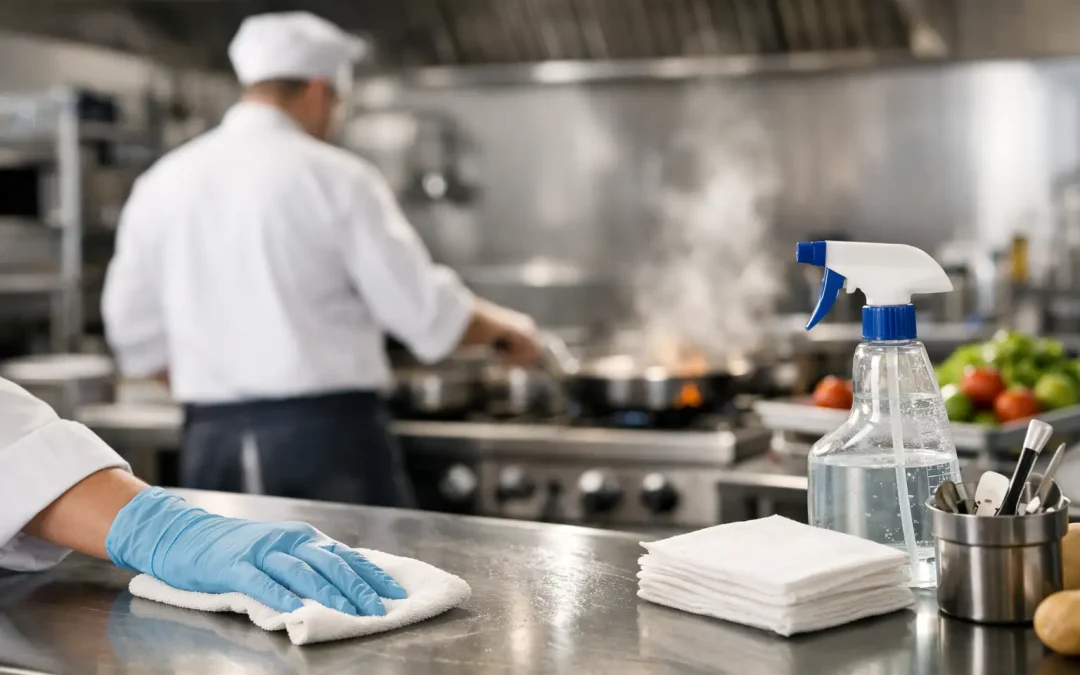
A failed hygiene check rarely comes down to one dramatic issue. More often, it is the build-up of small misses – grease left behind equipment, poor handwashing habits, fridges running warm, or cleaning records that do not match what is happening on site. That is why a clear commercial kitchen hygiene guide matters. It helps you protect customers, support staff, reduce fire risk, and keep your kitchen running to a professional standard every day.
For restaurants, cafés, takeaways, pubs, schools and care settings, hygiene is not only about appearances. A kitchen can look tidy and still hide bacteria, carbon build-up and grease in the places that matter most. Good hygiene needs routine, accountability and the right level of deep cleaning behind the scenes.
What a commercial kitchen hygiene guide should cover
A useful commercial kitchen hygiene guide should do two things well. First, it should make daily standards clear enough for busy teams to follow without second guessing. Second, it should identify the jobs that need more than a quick wipe at the end of service.
The basics are familiar – food-safe surfaces, clean equipment, temperature control and waste management. The difference between an average kitchen and a well-run one is consistency. If one shift cleans thoroughly but the next rushes through, problems build quickly. Grease travels, food debris settles into joints and corners, and extraction systems collect contamination long before it becomes obvious.
This is why hygiene should be treated as an operating system rather than a closing task. When cleaning is built into prep, service and shutdown, standards become more manageable and far less likely to slip.
Daily hygiene standards that keep kitchens under control
The strongest daily systems are simple and repeatable. Staff should know what must be cleaned, how often, and what product or method is suitable for each surface. Stainless steel prep areas, chopping boards, sinks, taps, handles and touchpoints need frequent attention throughout the day, not just after the last order.
Cross-contamination control sits at the centre of this. Raw and ready-to-eat foods must be kept separate in storage, prep and service. Cloths and tools should not move between tasks without proper sanitising. If your team relies on memory rather than a routine, standards can vary from one person to another.
Hand hygiene is another area where kitchens often overestimate performance. Good intentions are not enough during a busy shift. Staff need accessible wash stations, soap, drying facilities and a clear expectation of when handwashing happens – after handling raw food, after waste disposal, after cleaning tasks and after any break in food prep.
Floors also deserve more attention than they often get. Spills are usually cleaned quickly for safety reasons, but grease film can remain even when a floor looks clean. That residue affects hygiene and creates slip risks. A proper clean should remove build-up, not just spread it around.
The overlooked areas where hygiene problems start
The biggest hygiene risks are often the least visible. Underside edges, wall junctions, kickboards, shelving brackets, seals, hinges and the spaces behind cooking equipment can hold heavy grease and debris. These areas are easy to ignore when staff are under time pressure, but they are exactly where pests, odours and contamination issues begin.
Extraction is another common weak point. Canopies, filters, ducts and fans collect grease continuously. If they are not cleaned properly, airflow suffers and the risk level rises. This is not only a hygiene concern. It can also become a serious fire hazard. Surface cleaning around a cooker line may make the front of house feel under control, but it does not deal with what is building up overhead and deeper into the system.
Cold storage can be just as problematic in a different way. Shelves, door seals and drainage points may be missed because they seem lower risk than hot cooking areas. In reality, poor fridge hygiene can lead to contamination, spoiled stock and temperature inconsistency. A clean refrigerator that is not holding the right temperature is still a hygiene issue.
Staff habits matter as much as cleaning products
It is easy to assume better chemicals will solve hygiene problems, but most kitchens do not fail on product choice alone. They fail on habits. If staff prop open bins, reuse dirty cloths, skip checks, or leave equipment partly dismantled but not fully cleaned, the standard drops regardless of what is in the cleaning cupboard.
Training needs to be practical and specific to the site. General instructions such as clean down properly or keep the kitchen tidy are too vague. People need to know exactly what good looks like in your kitchen. That means showing the right method, the expected finish, and the parts of equipment that cannot be missed.
It also helps to assign ownership. Shared responsibility sounds fair, but in practice it can mean nobody notices a missed task until it becomes a larger issue. Named responsibilities by area or shift tend to work better, especially when backed up by simple checks from supervisors or managers.
Cleaning schedules that work in real kitchens
A schedule should reflect how the kitchen actually operates. A small café with a limited hot menu will not need the same pattern as a busy takeaway or production kitchen. The right plan depends on volume, equipment type, service hours and the kind of grease and food waste your operation produces.
That said, most kitchens benefit from dividing tasks into three levels. There are the constant through-the-day cleans, the end-of-day resets, and the periodic deep cleans. Problems usually start when the third category is neglected. Daily wiping can only do so much once grease has baked onto surfaces or settled into extraction and hard-to-reach equipment parts.
Records matter too, but only if they reflect reality. Tick sheets filled in automatically do not protect your business. A shorter schedule that staff can complete honestly is far more useful than a detailed one that gets ignored. If managers review it properly, a schedule becomes an early warning system rather than a paperwork exercise.
When specialist cleaning is the right call
There is a point where in-house cleaning is no longer enough. That does not mean your team is failing. It means some jobs require professional equipment, safe access, experience and time that a kitchen team simply does not have during normal operations.
Extraction and duct cleaning are a clear example. These systems need thorough cleaning beyond the visible canopy area. Commercial ovens, grills, fryers and surrounding surfaces can also develop heavy carbon and grease deposits that standard daily cleaning will not remove fully. The longer these are left, the harder they become to tackle and the more they affect hygiene, performance and presentation.
A specialist clean can also be useful before inspections, after a tenancy change, following refurbishment work, or when standards have slipped and the kitchen needs resetting properly. For businesses across Kent, especially in busy trading areas such as Maidstone and Medway, a professional deep clean can save time, reduce risk and bring the whole space back to a standard your staff can maintain more easily.
Building a hygiene standard you can actually maintain
The best systems are not the most complicated. They are the ones your team can keep up every week, even when the kitchen is under pressure. That means realistic schedules, proper supervision, clear storage rules, good stock rotation and regular attention to the hidden areas that collect grease and bacteria.
If you run or manage a commercial kitchen, the goal is not perfection for one inspection day. It is a reliable standard that protects your business every day you trade. A clean kitchen supports compliance, but it also supports staff morale, customer confidence and the working life of your equipment.
If standards have started to drift, act early. It is always easier and more cost-effective to correct hygiene issues before they turn into failed inspections, breakdowns or expensive remedial work. Professional support can make a noticeable difference, particularly for deep cleaning and extraction systems, but the strongest result always comes from pairing that support with solid day-to-day habits.
A well-kept kitchen does not happen by accident. It comes from doing the basics properly, staying honest about risk areas, and getting expert help when the job needs more than a quick clean.