
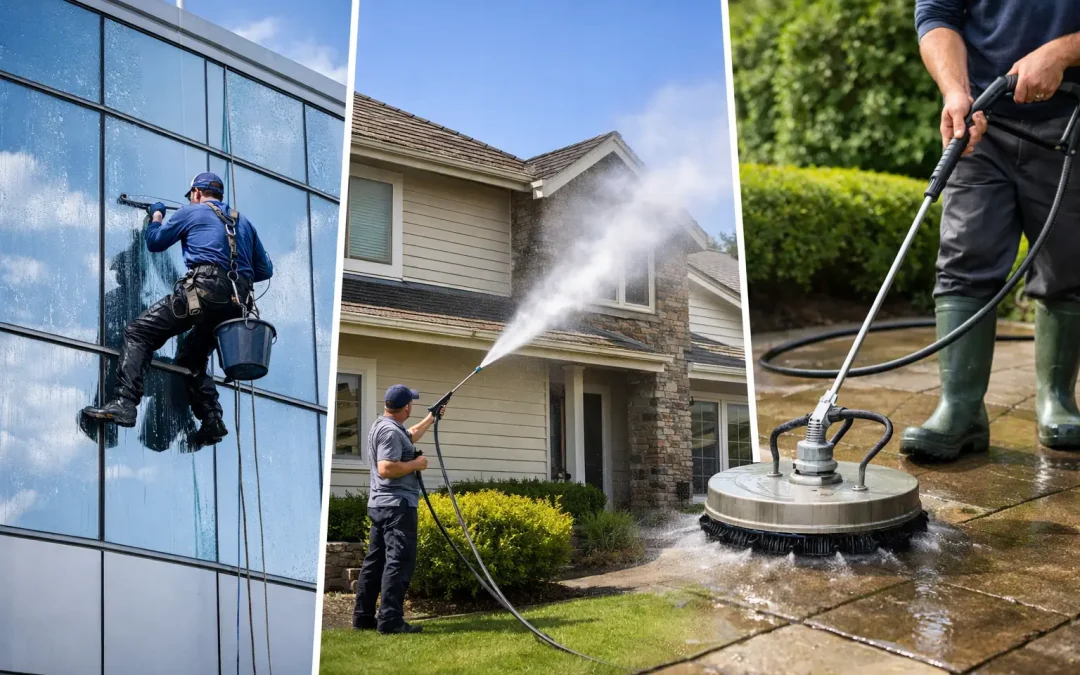
A patio that stays green through summer, gutters spilling over in the rain, or windows that never quite look clear can make a well-kept property feel neglected. The best exterior cleaning methods do more than improve appearance – they protect surfaces, reduce long-term maintenance, and help your home or commercial premises present properly.
The right method depends on the material, the level of soiling, and the risk of damage if the wrong equipment is used. A brick wall, a rendered finish, a conservatory roof and a block paved driveway all need a different approach. That is where many people come unstuck. Good exterior cleaning is not just about blasting away dirt. It is about choosing a method that gets strong results without shortening the life of the surface underneath.
What makes the best exterior cleaning methods effective?
The best results usually come from matching pressure, water volume, detergents and tools to the job in front of you. Heavy grime on concrete can often handle far more force than painted cladding or aged pointing. Organic growth such as algae, moss and lichen also needs a different treatment to traffic film, grease or general weather staining.
This is why exterior cleaning should never be treated as one-size-fits-all. Used properly, professional equipment can restore a surface quickly and safely. Used badly, it can strip coatings, mark render, loosen mortar, force water into weak areas and leave uneven cleaning lines that are hard to put right.
Pressure washing and jet washing
For many hard surfaces, pressure washing is one of the most effective options. It is particularly useful on patios, driveways, paths, yard areas and some brick or stone surfaces where dirt has built up over time. A well-controlled jet wash can remove moss, algae, mud, staining and ingrained surface grime with visible, immediate improvement.
It works best on durable materials that can withstand pressure without damage. Concrete and many paving slabs respond very well. Block paving can also clean up nicely, although it often needs re-sanding afterwards because the cleaning process can remove jointing sand. That is a detail some people overlook until weeds begin returning faster than expected.
Pressure washing is not automatically the best answer for every exterior surface. On weaker pointing, delicate stone, older surfaces or decorative finishes, too much pressure can do more harm than good. Even when the surface survives, poor technique can leave striping or a patchy finish. For property owners who want fast, visible improvement on robust outdoor areas, though, it remains one of the strongest options.
When lower pressure is the better choice
There are plenty of cases where lower pressure cleaning gives a better outcome. Painted exteriors, soft natural stone, timber and some roof coverings can all be damaged by aggressive washing. In those situations, controlled rinsing combined with the right cleaning solution is usually safer and more thorough.
Lower pressure takes a bit more patience, but it often preserves the finish and avoids expensive repairs. If a surface is already weathered or showing signs of weakness, gentler cleaning is normally the smarter decision.
Soft washing for delicate exterior surfaces
Soft washing is one of the best exterior cleaning methods for surfaces that need a gentler touch. Rather than relying on high pressure, it uses specialist cleaning solutions and low-pressure application to break down algae, mildew, lichen and organic staining.
This method is especially effective on render, painted walls, cladding, fascia and soffits, conservatory roofs and some roof surfaces. It is also useful where staining goes beyond surface dirt and has started to root itself into the material. Instead of only washing off what you can see, soft washing helps treat the growth at source.
The trade-off is that results are not always as instant as pressure washing. Some treatments continue working after application, so the surface can improve over the following days and weeks. For many customers, that is worth it because the finish tends to last longer and the risk of damage is much lower.
Gutter cleaning and why it matters more than most people think
Gutters are easy to ignore because the worst of the problem is often hidden from the ground. By the time you notice water spilling over, staining on the wall, or damp around the property, the blockage may already be causing avoidable damage.
Professional gutter cleaning removes leaves, moss, silt and general debris so rainwater can flow properly again. This helps protect roofing edges, fascias, soffits, walls and foundations from excess water. On residential properties, it also prevents the messy overflow that makes an otherwise tidy home look poorly maintained.
For landlords, estate agents and commercial premises, regular gutter clearance is often one of the most cost-effective maintenance jobs you can arrange. It is far cheaper than dealing with water ingress, damaged exterior finishes or complaints from tenants and visitors. In areas of Kent where trees and seasonal debris are common, staying ahead of gutter build-up is particularly worthwhile.
Exterior building washing for walls, render and cladding
Walls collect more than general dirt. Over time they pick up traffic film, algae, mildew, airborne pollutants and weather staining that can make an entire property look tired. Exterior building washing restores appearance while helping preserve the condition of the surface.
Brickwork often responds well to controlled washing, but render usually needs more care. Render can mark easily, and if cleaned too aggressively it may end up looking worse rather than better. Cladding also varies. Some finishes can cope with stronger cleaning than others, so the safest approach is always to assess the material first.
Commercial properties often benefit most from building washing because presentation matters the moment a visitor arrives. A clean frontage supports a more professional image, whether it is an office, retail unit, managed block or hospitality site. For homeowners, the value is usually kerb appeal, pride in the property, and preventing build-up from becoming harder to remove later.
Conservatory roof cleaning and window cleaning
Few things date a property faster than a conservatory roof covered in green staining and cloudy panels. Regular cleaning improves the look from outside and lets more natural light back in. The method matters here because roof panels, seals and frames can be damaged by poor access or overly harsh cleaning.
Window cleaning is similar in that the finish depends as much on technique as effort. Smears, spotting and missed edges are common when windows are cleaned with the wrong tools or when surrounding frames and sills are ignored. Professional window cleaning gives a sharper overall result because the whole area is treated properly, not just the glass itself.
For shops, offices and managed premises, clean glass also affects how your business is perceived. It is a small detail that carries more weight than many people realise.
Roof cleaning and moss removal
Roofs need careful handling. Moss may look like a cosmetic issue at first, but it can hold moisture against the surface, interfere with drainage and contribute to blocked gutters. Left too long, it can lead to ongoing maintenance issues rather than a simple clean.
The best method depends on the roof covering. Some roofs are suited to manual moss removal followed by treatment. Others may allow very controlled washing. High-pressure cleaning is not suitable in every case, especially where tiles are older or there is a risk of dislodging protective finishes.
This is one area where trying to save time can backfire. A roof may appear clean straight after aggressive washing, but if tiles, mortar or edges are disturbed, the real cost shows up later. Safer, more considered cleaning usually delivers better long-term value.
Choosing the right method for your property
If the surface is hard, stable and heavily soiled, pressure washing may be the right answer. If it is delicate, coated or affected by organic growth, soft washing is often the better route. If the issue is blocked drainage, then gutter cleaning should come before any cosmetic work. And if the building exterior has multiple problem areas, combining services usually gives the best overall finish.
That is often the most practical route for larger homes, rental properties and business premises. Instead of arranging separate contractors for windows, gutters, roofs and external surfaces, using one experienced team creates a more consistent result and a simpler job from start to finish. For customers in Maidstone, Medway, Sittingbourne and nearby areas, that can save both time and disruption.
A reliable exterior clean should leave the property looking better, functioning better and needing less remedial work afterwards. Fully insured professionals, proper equipment and the right method for each surface matter far more than simply choosing the cheapest quote.
If your exterior surfaces are looking tired, the best next step is not to guess which method might work. It is to get clear advice based on the materials, the condition of the property and the result you actually want.