
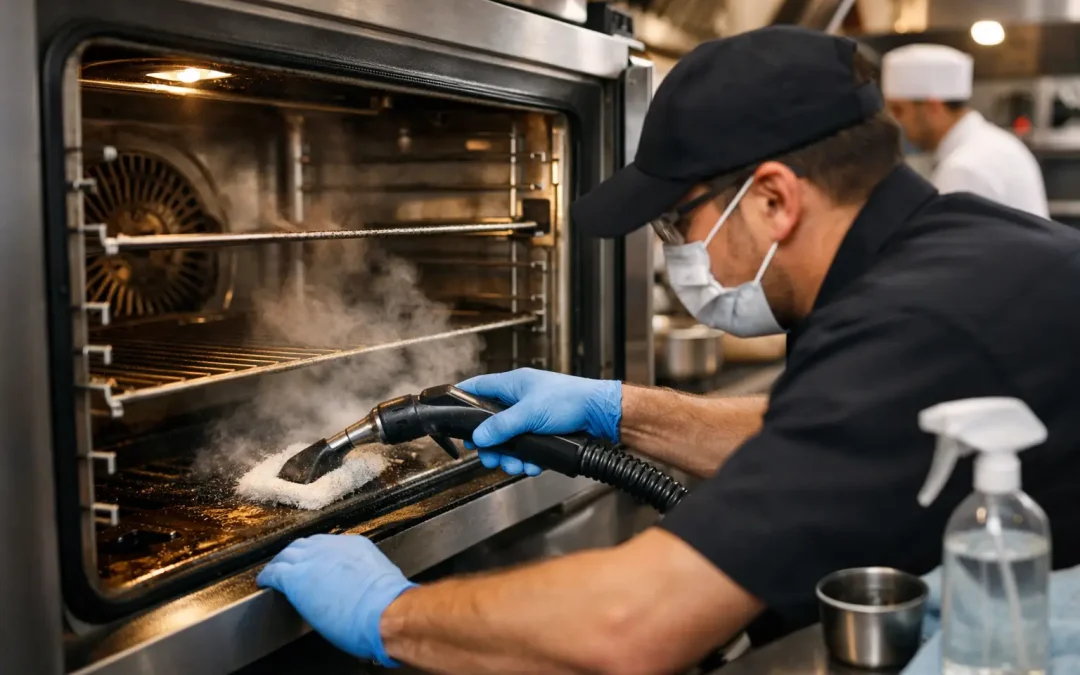
A busy service can expose every weakness in a commercial kitchen. When ovens are coated in grease, carbon and burnt-on food, they stop working at their best, cleaning routines take longer, and the whole kitchen feels harder to manage. That is why professional oven cleaning for restaurants is not a cosmetic extra. It is a practical part of running a safe, efficient and presentable kitchen.
In most restaurants, the oven is in constant use. It handles repeated heat cycles, spills, splashes, trays, fats and food residue from the first prep of the day through to the final orders of the night. Over time, that build-up does more than make the appliance look neglected. It can affect cooking performance, create smoke, contribute to unpleasant odours and raise hygiene concerns that no operator wants to deal with during service.
Why professional oven cleaning for restaurants matters
Restaurant owners and kitchen managers usually notice the problem in stages. At first, there is a bit more smoke than usual or a lingering burnt smell that does not go away. Then staff spend longer scrubbing between shifts, yet the oven never looks truly clean. Eventually, there may be uneven cooking, sticky doors, blackened interior panels and grease collecting in places that are difficult to reach safely.
Professional cleaning deals with what daily wipe-downs and rushed end-of-shift cleans often miss. A proper deep clean targets baked-on grease, carbon deposits, racks, trays, doors, seals and hard-to-access internal surfaces. The result is not just a better-looking appliance. A cleaner oven is easier to maintain, more pleasant for staff to use and better suited to a kitchen that needs to keep moving.
There is also a business case behind it. If your team is spending too much time fighting built-up grime, that is time taken away from food prep, hygiene checks and service tasks. If the oven is working harder because residue is interfering with performance, energy use may rise and wear on the equipment may increase. Cleaning does not solve every mechanical issue, but it gives your equipment a fair chance to operate properly.
The hidden costs of leaving commercial ovens too long
A dirty oven rarely becomes a serious problem overnight. The issue is that gradual build-up is easy to normalise when staff are busy and the kitchen is under pressure. What starts as a manageable layer of grease can turn into a stubborn deposit that is far harder to remove safely with standard in-house cleaning products.
One of the biggest risks is inconsistency. In a restaurant, consistency matters as much as speed. If heat is not circulating as it should because of heavy residue, cooking times and results can become less reliable. That puts pressure on chefs and can affect food quality at the pass.
There is a hygiene concern too. Grease and food debris create an environment that is harder to keep under control, especially around seals, hinges, trays and interior corners. Even if your wider kitchen standards are strong, neglected cooking equipment can undermine the overall impression of cleanliness and care.
Then there is staff safety. Heavy carbon and grease build-up can produce excess smoke, unpleasant fumes and in some cases increased fire risk. No operator wants avoidable hazards sitting inside a piece of equipment used every day. Regular professional attention helps reduce that risk and supports a safer working environment.
What a professional clean should include
Not every service is equal, so it is worth knowing what good professional oven cleaning for restaurants should look like. A proper service goes beyond a quick surface polish. It should involve a deep, methodical clean of the areas that affect hygiene, performance and day-to-day usability.
That often includes removable components such as racks, trays and panels, as well as interior walls, doors and grease-heavy sections that are difficult for staff to tackle thoroughly during normal cleaning routines. In a commercial setting, the job also needs to be carried out with the right equipment, suitable products and a clear understanding of food-service environments.
This is where experience matters. Restaurant kitchens are not the same as domestic spaces. Equipment is larger, used harder and often installed within busy working layouts where downtime needs to be managed carefully. A professional team should understand how to clean effectively without causing unnecessary disruption.
It also helps when the service provider is fully insured and used to commercial work. That reassurance matters when you are responsible for expensive appliances, compliance standards and a kitchen schedule that cannot afford careless mistakes.
How often should restaurants book oven cleaning?
There is no single answer because it depends on the type of restaurant, the volume of covers and the way the equipment is used. A small site with moderate oven use may need a different schedule from a high-output kitchen producing food all day.
As a general rule, daily staff cleaning should handle routine surface hygiene, but that is not a substitute for deeper professional work. If you wait until smoke, odour or heavy black build-up becomes obvious, you have usually left it too long. A planned cleaning schedule is easier to manage than an urgent one.
For many restaurants, the right approach is preventative rather than reactive. Booking regular deep cleans helps keep equipment in a consistently usable condition and avoids the stop-start cycle of neglect followed by emergency scrubbing. It is often more cost-effective too, because build-up is easier to remove before it becomes extreme.
If your kitchen includes multiple ovens or a mix of cooking equipment, it may make sense to review cleaning as part of a wider kitchen maintenance plan. This is especially useful for operators who also need extraction, duct or equipment cleaning arranged professionally and on a schedule.
Choosing a provider for professional oven cleaning for restaurants
Price matters, but it should not be the only deciding factor. Commercial kitchen cleaning needs to be thorough, dependable and carried out by people who understand the standards expected in a working food business. A cheap job that leaves grease behind or causes disruption is rarely good value.
Look for a company that is clear about what is included, experienced in specialist cleaning and able to work around the practical needs of your business. Insurance cover is important. So is a professional approach to equipment care, hygiene and communication. You want a team that turns up when agreed, works efficiently and leaves clear visible results.
Before-and-after proof, customer reviews and straightforward quoting can all help you judge whether a provider is likely to deliver. For restaurants in Kent, working with a local company can make scheduling easier and improve response times, especially if you need ongoing support rather than a one-off visit.
A reliable local service also tends to understand the pressures faced by independent restaurants, takeaways, pubs and catering sites. That local knowledge does not replace technical ability, but it can make the whole process more practical from first enquiry to completed clean.
When in-house cleaning is not enough
Kitchen teams should absolutely be cleaning equipment daily, but there is a limit to what can be achieved during busy shifts and closing routines. Staff are usually dealing with time pressure, limited access, basic products and the need to get the kitchen ready for the next day. That is enough for general upkeep, not a full deep restoration.
Professional cleaning is there to support your team, not replace them. It fills the gap between routine hygiene and the deeper work required to keep ovens in strong working condition. That balance is usually the most realistic option for restaurants that want high standards without overloading their staff.
It is also worth remembering that harsh DIY methods can do more harm than good. Abrasive tools, unsuitable chemicals and rushed scrubbing can damage finishes, seals and components. A professional service should know how to remove heavy residue effectively while treating the equipment properly.
For operators across Maidstone, Sittingbourne, Medway, Rainham and nearby parts of Kent, using an experienced specialist can save time, reduce hassle and help keep kitchen standards where they should be.
A clean oven does not just improve appearances. It supports the pace, safety and consistency your kitchen depends on every day. If your equipment is starting to show the strain, dealing with it early is usually the simplest way to keep service running smoothly.